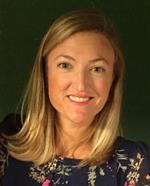
"The interprofessional nature of the MSPC program mimics the reality of healthcare practice. The intensive communication lab experience gave me the tools and confidence for successful patient and family interactions, even under the most challenging circumstances. This training absolutely transformed my practice."
- Kacey Boyle, MSPC, BSN, RN, CHPN, University of Vermont Medical Center
Frequently Asked Questions
Palliative care is specialized care for people with serious and life-limiting illnesses. It is focused on providing patients with relief from pain and nonpain symptoms, and supporting patients and family caregivers through expert psycho-social-spiritual support to better manage the stress of a serious illness—whatever the diagnosis. The goal is to improve quality of life for both the patient and the family caregiver. Palliative care is provided by a team of nurses, physicians, physician assistants, social workers, spiritual care providers, mental health providers, and other specialists who work together with a patient to provide an extra layer of support. Palliative care is appropriate at any age and at any stage of a serious illness and can be provided along with curative treatment.
Palliative care is available for patients at any stage of a chronic, serious, or life threatening illness, whereas hospice is offered to patients in the final months of life. Palliative care providers find themselves treating patients across their lifespan. Our palliative care programs will teach you to manage long-term symptoms and pain by integrating both clinical and psycho-social-spiritual approaches and perspectives.
Typically, information sessions are offered a few times a month at various times. It is free to register for an information session and can give you an opportunity to learn about faculty, ask questions, and investigate whether the program is right for you. If you register for an information session, your application fee will be waived.
No, the Interprofessional Palliative Care Graduate Certificate (IPCC) and Master of Science in Palliative Care (MSPC) are offered online.* The Community Hospice and Palliative Medicine fellowship educational components are completed online and the clinical requirements are satisfied in your home community.
*The first year (IPCC/MSPC year 1) includes a three-day virtual synchronous intensive in late September. The second year (MSPC year 2) has an additional three-day virtual synchronous intensive in early August the summer between first and second year.
All MSPC courses are online; most are asynchronous, and students are able to complete their assignments over the course of one week per module. Some assignments are synchronous Zoom video conferences at designated dates/ times. The program also includes two three-day intensives completed in virtual synchronous Zoom sessions.
The CHPM is an ACGME-certified palliative care fellowship in which physicians may become board-eligible in Hospice and Palliative Medicine. Only physicians enrolled as students in the MSPC can apply for this program. If physicians are interested, they should apply to the MSPC and will be invited to apply for the CHPM Fellowship during their first semester. Typically, students must complete the first year of the program in order to begin the CHPM fellowship.
Admission to the MSPC does not guarantee acceptance to the CHPM. The CHPM Fellowship allows for mid-career physicians interested in palliative care to pursue a fellowship without leaving their community. The program is 40 credit hours over 2+ years and includes a clinical component within a palliative care/hospice setting. Students are expected to work with their home institution and the CHPM leadership to secure a program learning agreement (PLA) prior to beginning the fellowship.
The CHPM Fellowship is approved for upwards of 16 slots per year for a two-year program (32 total). Students must demonstrate ability to thrive in the online and distance learning environment of the MSPC program to be competitive for the fellowship.
Students complete the first 12 credit hours of the MSPC program in the graduate certificate program. Upon completing the IPCC, students may choose to continue their study in the MSPC program. Students who want to continue should contact the program coordinator during their first semester for additional details.
The MSPC program at CU Anschutz was the first master’s degree in palliative care offered in the United States. Our faculty are experts in their fields with real-world experience in palliative care, including physicians, physician assistants, nurses, social workers, psychologists, spiritual care providers, and pharmacists.
Our program is truly interdisciplinary, meaning you’ll learn alongside students in other professions with their own unique perspectives on palliative care. Learning online also gives you the flexibility to balance other commitments with your studies and immediately begin integrating what you learn into your current workplace.