Dudley Family Legacy Expands Through New Endowed Chairs at the CU Anschutz Cancer Center
Written by Danielle Davis
Jul 7, 2026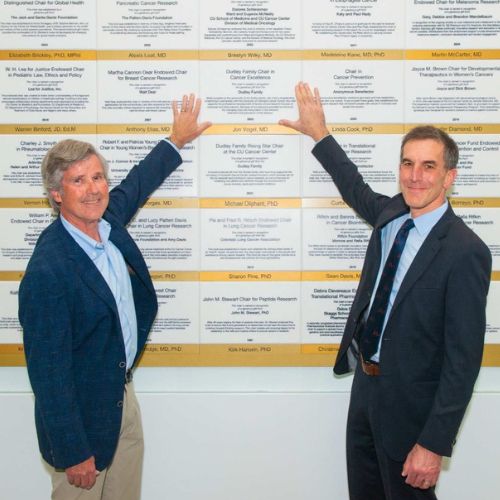
University of Colorado Anschutz celebrated the establishment of two new endowed chairs on May 27, recognizing the Dudley family’s longstanding commitment to advancing cancer research and patient care at the CU Anschutz Cancer Center.
Held in the Anschutz Health Sciences Building, the event honored Jon Vogel, MD, inaugural holder of the Dudley Family Endowed Chair in Cancer Excellence, and Michael Oliphant, PhD, inaugural holder of the Dudley Family Rising Star Endowed Chair. The celebration brought together 27 attendees, including faculty leaders, colleagues and members of the Dudley family.
With the addition of Drs. Vogel and Oliphant, the Dudley family’s philanthropy now supports four endowed chairs at CU Anschutz, creating a community whose work spans cancer prevention, translational research, clinical innovation and patient-centered care. Throughout the evening, speakers noted the impact endowed chairs have on academic medicine, from creating stability for researchers to accelerating new discoveries and strengthening multidisciplinary collaboration across the Cancer Center.
“Tonight is about leadership, discovery and legacy,” said Cathy Bradley, PhD, dean of the Colorado School of Public Health and holder of the Paul A. Bunn, Jr. Endowed Chair in Cancer Research. “At the center of all three is the Dudley family.”
Bradley and Paul Bunn, MD, holder of the James Dudley Endowed Chair in Cancer Research, both reflected on the unique responsibility and opportunity that comes with serving as Dudley chair holders.
Bunn spoke candidly about the remarkable transformation of the Cancer Center throughout his decades-long career, reflecting on the advances in cancer research, clinical trials and collaborative care he has witnessed since first joining the institution.
“Like Dr. Bradley, I can say without hesitation that an endowed chair changes what is possible,” Bunn said. “It gives us the freedom to think bigger, to take scientific risks and to mentor the next generation of cancer researchers.”
Decades of Trust and Evolving Impact
The Dudley family have been steadfast advocates of the Cancer Center for over three decades. Their connection to CU began in the 1990s, when James Dudley was diagnosed with lung cancer and placed his trust in Dr. Bunn. Deeply moved by Bunn’s care, the family became loyal champions of his work and the broader mission of the Cancer Center.
From gifts to radiation oncology and stem cell oncology research, to the establishment of the Thoracic Oncology Research Initiative (TORI), their support has driven major progress across numerous Dudley-funded projects. In particular, the James C. and Elisabeth C. Dudley Lung Cancer Endowed Innovation Fund and the James C. and Elisabeth C. Dudley Faculty and Research Support Fund helped accelerate the development of new treatments and advanced prevention efforts.
Speakers emphasized the Dudleys' thoughtful and intentional approach to giving. Rather than centering recognition on themselves, the family has preferred to focus attention on faculty, scientific discovery and the patients ultimately impacted by advances in cancer care.
That philosophy was reflected throughout the evening, which celebrated not only scientific achievement but also the broader mission of expanding community engagement, advancing diversity, equity and inclusion efforts and creating opportunities for emerging leaders in cancer research.
James DeGregori, PhD, interim director of the CU Cancer Center, described endowed chairs as essential to advancing the Center’s long-term vision for innovation and collaboration.
“We are proud to carry that mission forward and to welcome new leaders into the Dudley chair holder community,” DeGregori said.
A New Era of Cancer Leadership
By welcoming new faculty into the Dudley chair holder community — a legacy that began with pioneers like Drs. Bradley and Bunn — it signaled a spirit of connection through a new generation of leadership at the Cancer Center. Together, the four Dudley chair holders represent a range of expertise, reinforcing the Dudley family’s enduring investment in attracting and supporting exceptional faculty.
Oliphant, who recently returned to CU Anschutz after completing a postdoctoral fellowship at Harvard Medical School, reflected on the significance of returning to the institution where he earned his PhD. His remarks focused less on personal recognition and more on the possibilities the endowed chair creates for future growth, scientific exploration and mentorship.
“This Rising Star Chair provides something incredibly rare in early-career research: flexibility,” Oliphant said. “It allows me to pursue innovative ideas, explore high-risk questions and build a research program focused on understanding how breast cancer develops and evolves resistance to treatment.”
The event also recognized Vogel’s leadership in colorectal cancer care and his role in strengthening multidisciplinary treatment models at CU Anschutz. In his remarks, Vogel reflected on the evolution of his career and the tremendous opportunity the endowed chair creates to further advance patient-centered care, surgical innovation and collaborative cancer treatment.
“This chair is a reminder that none of that progress happens in isolation,” Vogel said. “It happens because of partnerships — between clinicians and researchers, across disciplines and, most importantly, with donors who believe in the mission.”
Throughout the event, speakers repeatedly returned to a shared theme: meaningful progress in cancer research and care is only possible through long-term investment in people. For the Dudley family, that investment has always centered on empowering faculty to pursue bold ideas, mentor future generations and improve outcomes for patients and communities. 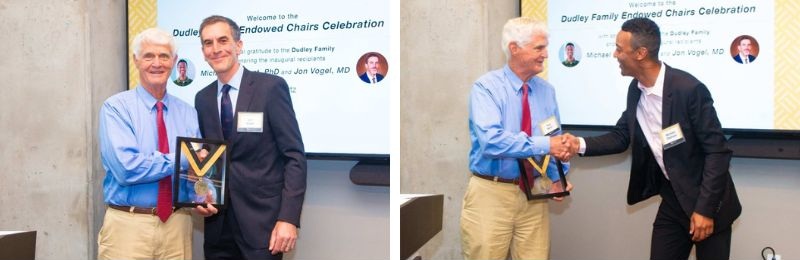
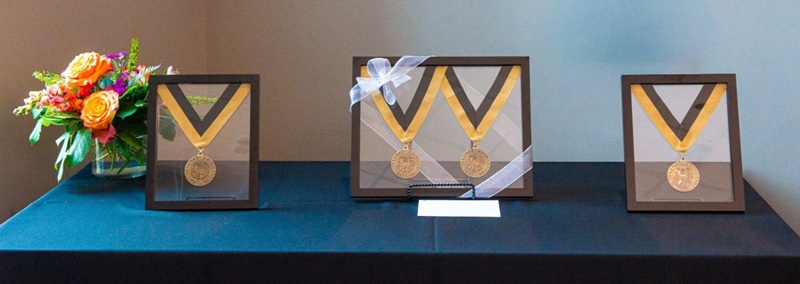
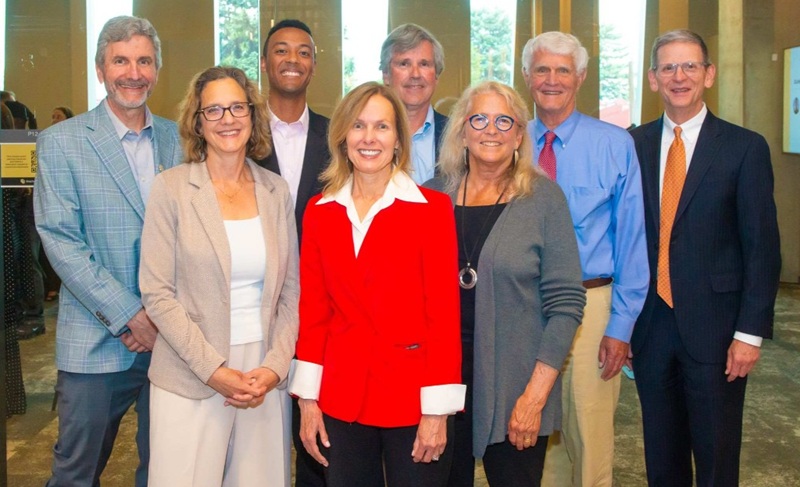
Toward the end of the evening, Vogel and Oliphant each received engraved medallions symbolizing the honor of joining the Dudley endowed chair community. Before the event concluded, all four Dudley chair holders gathered for a commemorative photo, representing a collective of faculty leaders whose work continues to shape the future of cancer research and care.