

Dignify the Journey: A Gift Turns Experience into Guidance for Dementia Caregivers
Written by Danielle Davis
Mar 19, 2026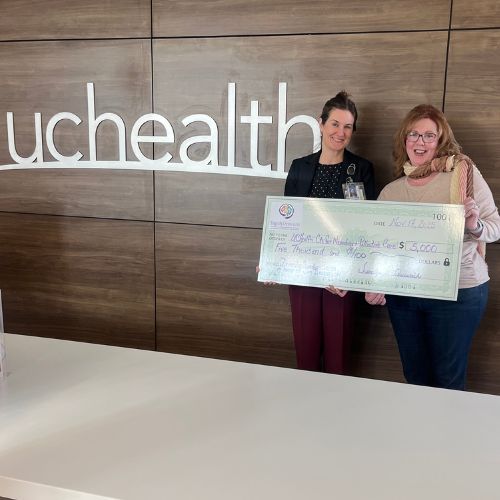
When caregivers first step into dementia, questions multiply faster than answers. What is changing with my loved one and why? What will tomorrow bring that today did not? At the University of Colorado Anschutz, clinicians in the Neuropalliative Care Section at the CU Anschutz School of Medicine know that the hardest part isn’t only medical — it’s the daily, human work of tending to memory, identity and safety while trying to hold a family together. This spring, that work gains a new voice.
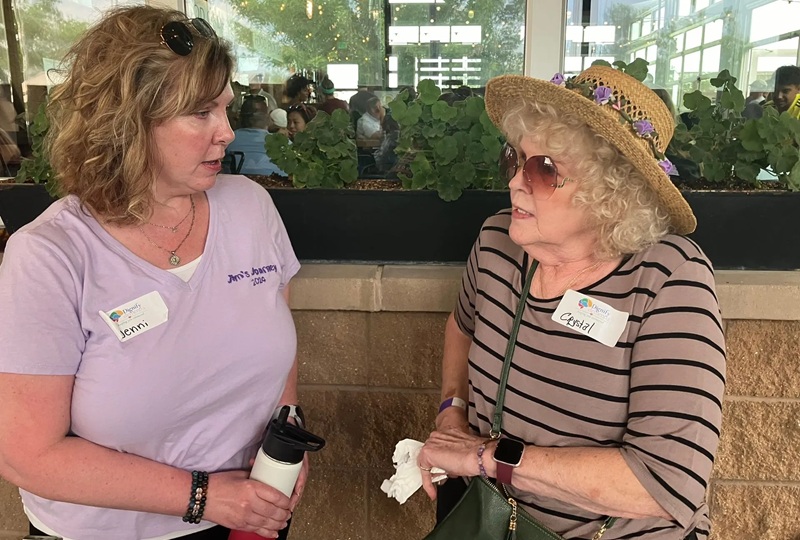
Thanks to a generous gift from Dignify Dementia, a nonprofit organization started by Jenni Desserich in honor of her father, Jim, CU Anschutz will launch a caregiver‑focused speaker series designed to meet families where they are with practical education, clear guidance and space to breathe.
Set to begin April 29, 2026, the series is built around a simple idea: when caregivers understand both the science and the lived experience of dementia, they can plan proactively instead of bracing for the next crisis and operating in a constant reactive state. The faculty team, led by Christina Vaughan, MD, MHS, sees the series as a bridge between what clinic visits can cover and what life with dementia continually asks.
“I am most excited for this speaker series to address the real‑world challenges families face as dementia progresses,” said Vaughan. “We want caregivers to better understand the disease trajectory, how to manage distressing symptoms, how to navigate care transitions and medical decision-making, and how to better support the caregiver’s well‑being.”
Because these are areas where families often feel unprepared, timely guidance can make a meaningful difference. Vaughan noted that caregiver education around dementia is critical right now due to the rapid increase in the number of individuals living with the disease. Worldwide, more than 40 million people are living with dementia, and that number is expected to double in the next 30 years.
“Caregiving extends far beyond daily tasks,” she said. “It means managing cognitive decline, behavioral changes, safety concerns and emotional stress over long and unpredictable disease trajectories. Many family caregivers step into this role suddenly and without formal training, and even professional caregivers report gaps in dementia-specific education.”
Extending the envelope of care
Clinic visits are vital for diagnosis and management, Vaughan noted, but they rarely leave enough time to unpack the complexity caregivers shoulder day after day. Dignify Dementia’s gift helps close that gap by bringing the right expertise to the right audience.
“This gift helps expand our reach, reduces barriers to accessing information and supports caregivers with knowledge and reassurance,” Vaughan said.
The new dementia speaker series pairs neurology with palliative care principles to help families anticipate what’s ahead and find practical strategies they can use now. What’s more, the series will connect families to community resources they may not know existed. The age-old adage of “you don’t know what you don’t know” rings particularly true for families who are thrust into a dementia caregiver role.
The emotional trauma of watching a loved one’s mental acuity slip away is painful enough without having to tack on additional burdens of decoding medical terminology and navigating a complex health system. “This will be a connection point to resources and evidence-based approaches, so caregivers feel less alone and more confident,” Vaughan said.
The need for plain-language essentials and accessible education is something Vaughan hopes to accomplish with this speaker series. She sees it as a resource hub and a safe space for families to work through the emotional reality of dementia. Often caregivers will experience feelings of guilt, isolation and grief, but they may not recognize these experiences as common or validated.
“Hearing directly from experts and peers will help normalize these challenges and emphasize that caregiver well-being is a critical component of quality dementia care, not an afterthought,” Vaughan explained.
The content will be intentionally interdisciplinary. Not only will sessions clarify what dementia is and how it unfolds over time, but by bringing together knowledgeable speakers from diverse disciplines, caregivers will receive anticipatory guidance and practical strategies.
“Ultimately, by strengthening caregiver education and support, we can reduce burnout, enhance patient safety and improve quality of life for both caregivers and those living with dementia,” Vaughan said.
At the end of the day, the message for caregivers is not simply what to do, but how to keep going — with compassion for the person living with dementia and for oneself.
The moment that sparked a movement
Desserich still remembers the moment everything shifted.
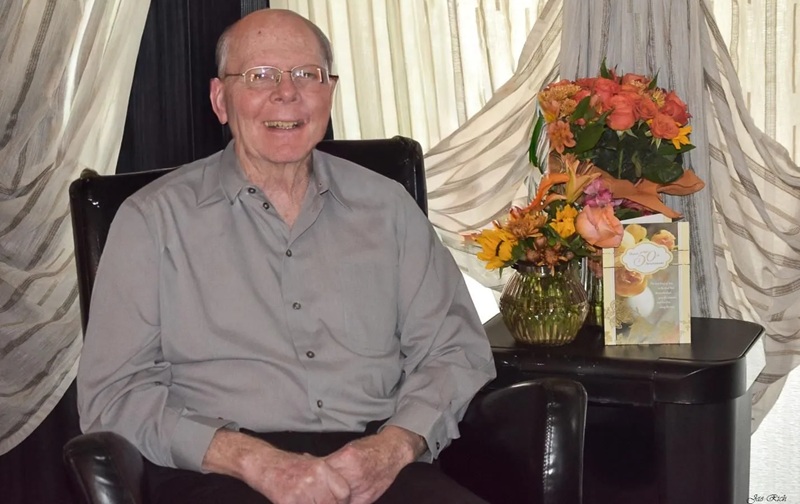
It was late 2016 when her dad began to change in ways that didn’t feel like aging. Things like unexpected falls, spiraling thoughts, mood swings that came out of nowhere, even hallucinations he tried to explain away. She knew something was wrong. She tried to convince her family that they needed specialized care; that time mattered; that early intervention could change the path ahead. But it wasn’t until her father broke down in public — shaken, frightened, exposed — that the family agreed to seek help.
What followed was not help.
Their first appointment, with a provider outside the UCHealth system, lasted only minutes. The neurologist watched her father walk down a hallway, interrupted their attempts to describe two years of concerning symptoms, and offered a diagnosis followed by a shrug. “It’s probably Lewy body dementia,” he said. “But the only way to confirm this is through an autopsy, so we’ll know for sure when you die.”
No explanation. No plan. No resources. The few questions her father mustered — What is that? How do we help other people like me? — went unanswered. By the time the doctor slipped out of the room, the family was left stunned, holding more fear than information.
On the drive home, Desserich made her father a promise: first they would figure out how to help him. Then they would find a way to help others.
It was a promise that opened the door to a different kind of care.
Through connections in neurology and at the UCHealth outpatient palliative care clinic, Desserich secured a second opinion; it was grant‑funded, out of network and life‑changing. There, her father’s diagnosis was confirmed with clarity and compassion. When enrollment season arrived, she found an insurance plan that would allow him to transfer his care, and once they did, they never looked back.
What Desserich’s father received at CU Anschutz was the care she believes every patient and family deserves: education that illuminated instead of overwhelmed, advocacy that eased the burden of navigating an impossible system, resources that restored a sense of control, and support that treated the entire family as part of the clinical picture.
“The outpatient palliative care clinic transformed my father — and our — entire care experience,” she said. “We wanted to make sure other families could find the same guidance and support we did.”
That transformation became the foundation of a much larger mission. Her father had wanted to help “others like him,” and Desserich carried that wish forward. The nonprofit she created, Dignify Dementia, was born from that promise in the car and from the stark contrast between the care they were first offered and the care that ultimately carried them through.
“At Dignify Dementia, our goal is to support the medical community that helped my family and countless others navigate through unimaginable circumstances that accompany a dementia diagnosis,” she said. “We aim to assist them and the broader caregiving community by providing opportunities for additional education and support. We believe that partnering with Dr. Vaughan is the best way to make this vision a reality.”
What philanthropy unlocks
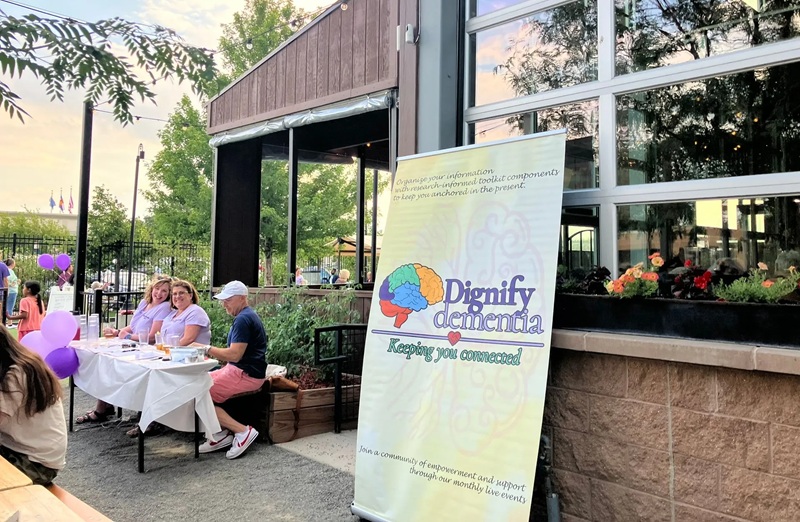
Today’s speaker series is a continuation of that commitment and a tribute to the clinicians who made the Desserich family feel seen. It stands as both a thank‑you and an invitation: to learn, to understand and to ensure that no other family has to navigate those early, disorienting steps alone.
“We wanted to partner with the Neuropalliative Care Section because it was important to my whole family, especially my dad, to show our gratitude and give back to those who transformed our care experience,” Desserich explained. “Dr. Vaughan showed us immense kindness by supporting us at every step of our journey, from diagnosis to the very end. Her team has transformed this clinic into something truly special that positively changes lives.”
That gratitude runs in both directions. For Vaughan and her colleagues, stories like Jenni’s are a north star; it’s a reminder that neuropalliative care can change not only outcomes but experiences.
“We are truly grateful to Jenni, her family and her organization,” said Vaughan. “It was a privilege to care for her father over several years. When families share how our team has helped them feel heard, guided and supported during an incredibly vulnerable time, it reinforces the importance of caring for the whole person, not just the neurologic condition.”
The partnership with Dignify Dementia and the start of this speaker series brings more than a single event; it brings a community. Each session is an opportunity to walk alongside others who are asking the same questions and facing the same unknowns. And it’s a tangible demonstration of what philanthropy does at CU Anschutz when it listens closely; it builds structures that hold families up.
REGISTER FOR THE FIRST DEMENTIA CAREGIVER SESSION
Loss, Loneliness & Love in Caregiving: Addressing What Matters Most to Carers of Persons with Parkinson’s and Lewy-body Dementia
Featured Speaker from the University of Rochester:
Sandhya Seshadri, PhD, MA, MS
Assistant Professor of Neurology, Deparment of Neurology
Assistant Professor, Center for Health & Technology
University of Rochester
Wednesday, April 29, 2026
1:00 p.m. (MDT)
Register Today